The Three-Pin Truth: Occasional EV Top-Ups Without Turning Your Driveway Into a Fire Risk
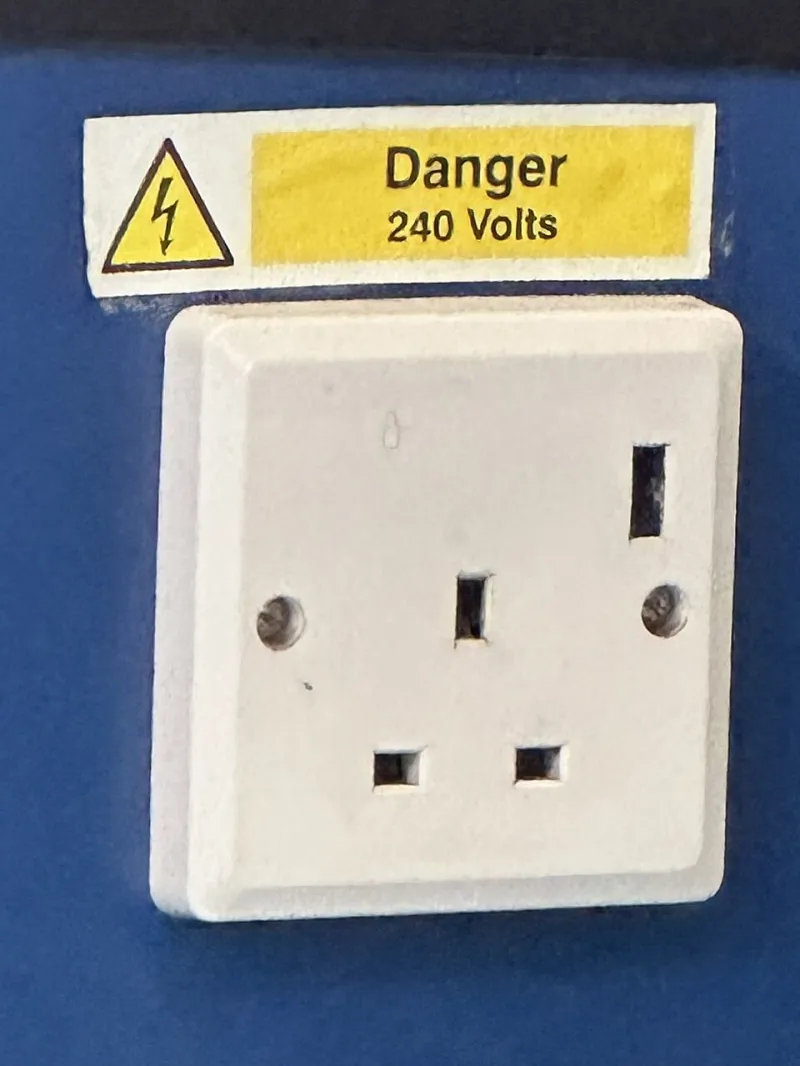
Photo: OathOn, CC BY-SA 4.0, via Wikimedia Commons
What a granny cable actually does
A three-pin EV cable is a wonderfully unglamorous thing. It plugs into a normal UK 13A socket and usually pulls around 10A, which works out at roughly 2.3kW. That is a trickle, not a torrent. It will add a useful chunk of range overnight, but it is not designed to be your permanent home charging strategy.
The cable is often called a granny cable because it is the lead you take to a relative's house, a holiday cottage or an emergency top-up. That is a good mental model. A guest can stay for the night. A guest should not move into the spare room and start rearranging the furniture.
The socket is the first suspect
Before you blame the car, look at the socket. A worn 13A socket with loose contacts, heat marks, discolouration or a faint buzzing noise is not a charging point. It is a warning. Old sockets, cheap accessories and years of kettle-level use can all add up when you ask them to supply a continuous load for hours.
Avoid multi-plug adapters, cube adapters and timer plugs. A dedicated socket on its own circuit is better than a shared ring final, but even a good ring final is not an invitation to charge every night on a socket that has seen better decades. If the socket is outdoors, check that it is genuinely weatherproof and that the lid can close properly. If the wiring is old or you do not know its history, get an electrician to look before you make granny charging a habit.
RCD protection is not optional
UK socket circuits should have 30mA RCD protection, but do not assume it is there just because the consumer unit has a sticker on it. Test the RCD using its test button, and if the installation is old or unclear, get it checked. Some granny cables have an in-cable RCD, but not all do, and an in-cable device is not a substitute for a properly protected socket circuit.
If you are charging outdoors, the combination of damp, long cable runs and a plug that is not quite seated is exactly the sort of thing RCD protection is for. It is also exactly the sort of thing that makes a dedicated 7kW charge point with proper RCBO protection look like money well spent.
Extension leads: just do not
A domestic extension lead is not an EV charging cable. Coiled leads can heat up, long leads can drop voltage, and the plug and socket joints become the weak point. A 13A extension lead that is fine for a hedge trimmer is not fine for a multi-hour EV load.
Use the cable that came with the car. Do not use travel adapters, do not daisy-chain leads, and do not run the cable through a doorway where it can be pinched or tripped over. If the cable is too short, move the car or rethink the charge point. That is the boring answer, and it is the right one.
Temperature checks and weather
After the first half hour, check the plug pins, the socket face and the cable. Warm is normal. Hot, crackling, discoloured or smelling of hot plastic is not. Stop charging, unplug if it is safe to do so, and get the socket checked. Uncoil the cable fully so heat can escape, and keep the control box off the wet ground.
A granny cable is not a permanent outdoor fixture. Rain, UV and damp will eventually have a say. If you are charging in wet weather, make sure the socket is designed for it, keep connections sheltered and never plug in with wet hands or while standing in standing water. Do not cover the control box with a bag or a box to 'protect' it unless the manufacturer explicitly says that is fine.
When a 7kW charge point is the smarter buy
If you charge more than once a week, need a full battery by morning, run two EVs, or regularly arrive home with very little range, a proper 7kW home charge point is the better tool. It uses a dedicated circuit, proper RCD and RCBO protection, PEN fault detection where required, and usually some form of load management or smart scheduling. It is also weatherproof and designed to be outside for years.
Budget for the unit and installation together, because the cable run and earthing arrangements often matter more than the box on the wall. A granny cable is cheap to buy and expensive to rely on. A 7kW charger is the opposite.
The guest routine
If you are using a three-pin cable occasionally, make it a routine. Inspect the plug and cable. Check the socket. Uncoil fully. Plug in properly. Check the temperature after half an hour. Do not leave it draped across a walkway. Do not use it on a socket you would not trust with a tumble dryer overnight.
Then put it back in the boot, where it belongs. The granny cable is a guest, not a resident.