The Cable Stays or It Goes: Picking the Right Home EV Charger for Your Driveway
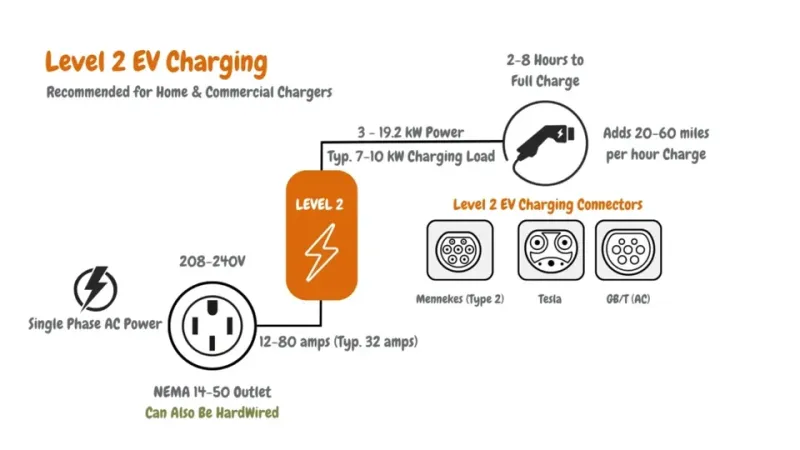
Photo: James Ndungu, CC BY 4.0, via Wikimedia Commons
Choosing a home charge point can feel like a specs-sheet exercise: 7kW or 11kW, smart or dumb, app or no app. But for most UK garages and driveways, the decision that shapes daily life is simpler: do you want the cable attached to the charger, or do you want to plug in your own? Tethered and untethered units both work. The trick is matching the cable arrangement to your parking, your household and your tolerance for faff.
Start with where the cable will live
Tethered chargers come with a lead fixed to the unit. You grab the plug, walk it to the car, and hang it back on the holster. Untethered chargers have a Type 2 socket, so you use the cable that came with the car or a separate one. On a tight driveway, that difference is everything. A 5m tethered lead may be perfect for a car parked nose-in; a 7.5m lead can reach across a second bay but is more cable to coil. Untethered lets you choose length per car, but you need somewhere sensible to store the lead when it is wet and gritty.
Weather, wear and the daily grind
Tethered cables live outside, so they take UV, rain, frost and the occasional wheelie-bin scrape. A good holster keeps the plug off the ground and stops grit getting into the pins. Some units have a lockable holster or a cable lock, which is handy if you want to leave the lead plugged into the charger but not invite casual use. Untethered setups keep the cable with you, which can mean less UV exposure, but the socket on the charger is still outside. Check the flap, seal and drain path. If water pools around the unit or the socket faces driving rain, that matters more than the tethered debate.
Multi-driver households and more than one EV
For a one-car, one-driver household, a tethered charger is hard to beat. It is one motion, one lead, no hunting in the boot. Add a second driver, a second EV or a regular visitor, and untethered starts to make sense. Each car can keep its own cable, and nobody has to unplug a neatly coiled lead because someone else needs the charger. Tethered units can still work for two cars, but you are sharing one cable and one holster. If your household has a short city EV and a bigger family car, an untethered socket gives you more room to manoeuvre.
Locks, holsters and the small details
Look beyond the headline kW rating. A cable lock stops the lead being removed from the charger, but check whether it also locks the plug into the car. A holster that holds the plug by the body, not the cable, is less likely to strain the connection. Untethered units should have a socket shutter or cover that is easy to use with cold hands. Cable hooks and wall docks are cheap but transformative; a tangled lead on the garage floor is a trip hazard and a wear point. If you park outside, a retractable or spring-loaded cable management accessory can be worth more than an extra app feature you will never open.
Resale, rentals and future flexibility
Chargers tend to stay with the house. If you move, a tethered lead is a fixed asset; an untethered socket is a bit more universal. That can matter for resale or letting, because the next owner may have a different car and a different cable. Untethered also gives you an exit route if cable standards or car-side connectors change, though UK cars have settled on Type 2 for AC charging. A tethered unit with a detachable lead is a halfway house, but check the replacement cost and availability before you bank on it.
Features that matter more than the cable
Prioritise a reputable installer, a weather-rated unit and a sensible cable route. Load management is not optional if your supply is tight; a clamp and app that actually work together are worth more than a fancy dashboard. Scheduling for off-peak electricity, a clear status light and a warranty that covers the cable as well as the box all matter. For UK homes, check the unit has the required RCD protection and that the installer has accounted for earthing and PEN fault protection. Those are not glamorous, but they are the difference between a safe install and a nagging worry.
The practical verdict
Pick tethered if you have one car, one driver and a straightforward parking spot. You want the lead to live on the charger and you do not want to unpack the boot every night. Pick untethered if you have multiple drivers, regular visitors or a car that already carries a good cable. You want the flexibility to swap leads and keep each car's cable with the car. Either way, spend a few minutes thinking about where the cable will hang, how it will dry and whether you can reach the car without stretching. That is the decision that is harder than it looks, and the one you will live with every day.