Spare Capacity Isn’t a Blank Cheque: Auditing Your Garage Supply After an EV Charger

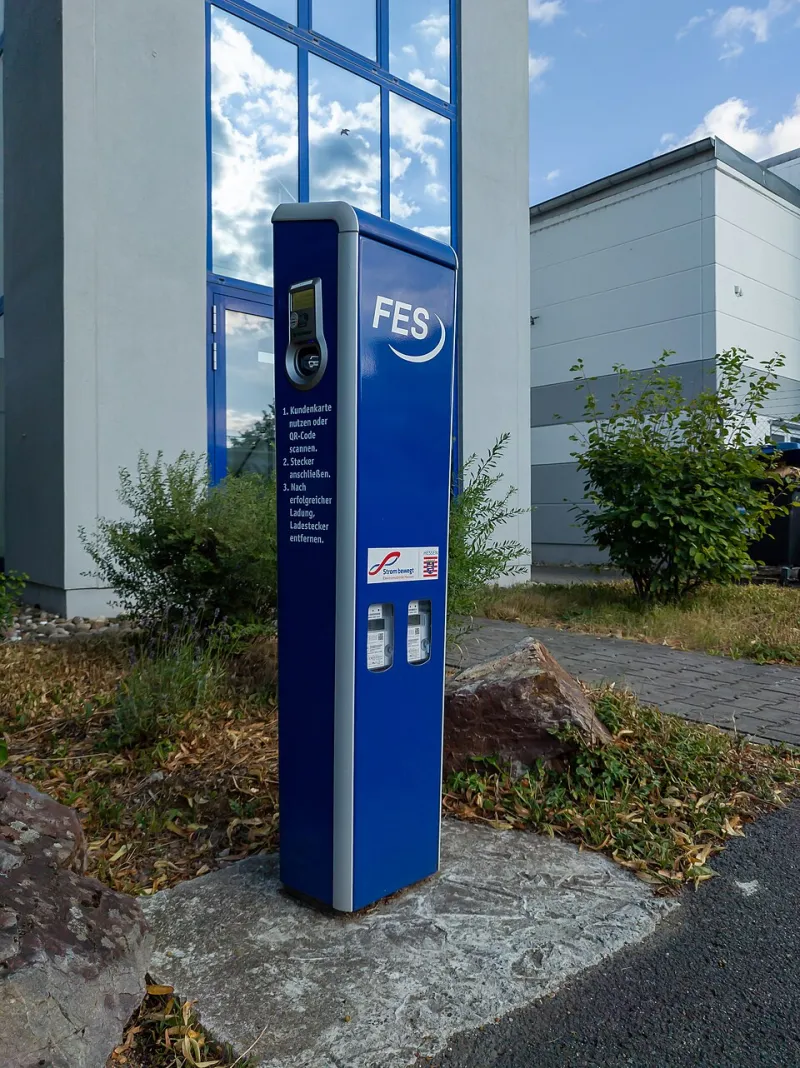
Photo: Humphrey Bolton , CC BY-SA 2.0, via Wikimedia Commons
An EV charger changes the electrical weather in a garage. A typical 7kW home unit can pull around 30 amps for hours at a time, quietly and without complaint, while you are inside making tea. That is brilliant for the car. It is also a long, steady load that did not exist before, and it has to sit alongside every fan heater, compressor, welder and battery charger you already own.
The temptation, once the charge point is neatly mounted and the cable is hanging just so, is to treat the consumer unit like a pub with a spare table. There is a free way, so something must be able to sit there. In practice, spare ways in a consumer unit are not the same as spare capacity in the supply. Before you add another circuit or reach for a four-gang extension lead, it is worth doing a proper garage power audit.
First, separate socket space from supply capacity
A consumer unit can have empty slots and still be near its practical limit. The question is not how many breakers you can physically fit, but what the supply, meter tails, distribution board and garage submain can carry safely under real conditions.
Many UK garages are fed by a submain from the house: often a swa cable, sometimes an older plastic conduit run, protected by a breaker in the main board. That cable may have been sized for a light, a socket or a small workshop years ago. An EV charger added later may already be using a large slice of that capacity. The fact that nothing has tripped yet is not proof of headroom. It just means you have not asked everything to work hard at the same time.
A 13A socket is not a budget. It is a fixed point with a fixed limit, and a double socket is not an invitation to run two high-draw appliances flat out. The charger should have its own dedicated circuit, installed to the relevant UK wiring regulations, with the correct protective devices and cable sizing. Everything else in the garage needs to be considered around that.
Diversity: the maths that keeps the lights on
Electricians use the idea of diversity: not every load runs at full power at once. That is why a house can have a shower, an oven and a kettle without the main fuse giving up every morning. But EV charging is different. It is a continuous load, often running for several hours, and it should not be diversified away in the same casual way as a kettle.
Do a simple mental sum. A 7kW charger is roughly 30A at 230V. Add a 3kW fan heater and you are near 43A. Add a 2.2kW compressor starting up and the instantaneous demand can spike much higher. If the garage is on a 32A submain, that combination is not a clever use of spare capacity; it is a test of how quickly a breaker can trip.
This is where a qualified electrician earns their fee. They can calculate maximum demand properly, check cable sizes and earthing, and confirm whether the charger has been set up with load management or a lower maximum current. Some chargers can throttle themselves when the house is busy. That is useful, but it only manages the charger. It does not magically create capacity for a welder.
Load management is not a free pass for every tool
Dynamic load management, current clamps and solar diverters are genuinely useful. They let a charge point back off when the house is drawing a lot, or soak up surplus solar. But they are not a garage-wide referee. If you plug a 3kW heater into a socket circuit while the charger is running, the charger’s clever clamp may not know or care. The socket circuit still has to carry that heater.
Treat load management as one layer of safety, not a licence to add appliances. If you want to run heavy kit alongside charging, the proper answer is usually a dedicated circuit, an interlock, a schedule, or a supply upgrade — not another adapter.
The three usual suspects: heaters, compressors and welders
Heaters are the quiet overload. A 2kW or 3kW fan heater can run continuously for hours, and it will happily sit on the same ring or radial as a battery charger and a kettle. If the garage is cold and the car is charging, this is exactly when the load stacks up.
Compressors are the inrush merchants. A motor that runs happily at 1.5kW can draw a much larger surge on start-up, which is why a compressor on a long extension lead can trip a breaker or overheat a plug. They deserve a properly sized dedicated circuit, not a daisy chain.
Welders are in a different league. Even a small inverter welder can ask a lot of a supply in short bursts, and a larger transformer set can be seriously hungry. If welding is part of your garage life, get a dedicated supply designed for it. A 16A or 32A industrial socket, correctly installed, is a far better neighbour to an EV charger than a 13A plug with a travel adapter.
Warning signs your garage is asking too much
Stop and get advice if you notice any of these:
- The breaker trips when the charger and a heater or compressor run together.
- Plugs or socket faces feel warm, or show discolouration.
- Lights dim noticeably when a compressor starts.
- There is a buzzing, crackling or hot-plastic smell near a socket or consumer unit.
- The RCD trips regularly, especially in damp weather.
- The EV charger keeps derating or charging slower than usual.
- Cables feel warm under load, or extension leads are coiled up while in use.
None of these are “just one of those things”. They are the garage telling you that the load is out of step with the wiring.
A practical audit you can do without opening the consumer unit
You do not need to take the cover off to get organised. Start by labelling the circuits you know, noting the rating on the charger, and writing down the wattage of the tools and heaters you actually use. Check the charger paperwork for its maximum current setting and any load-management details. A plug-in energy monitor is fine for 13A appliances, but it is not a substitute for testing fixed wiring.
Then make a simple load sheet: charger, heater, compressor, welder, lights, battery chargers. Mark which ones might run at the same time. Most garages become much clearer on paper. If the sheet shows the charger plus a heater plus a compressor, you have your answer before you buy another socket.
When to call an electrician rather than add another lead
Call a registered electrician for any new fixed heater, compressor or welder circuit, any extra socket you want in the garage, repeated tripping, an old fuse box, a suspect submain, or any plan to increase charging power. Work in a garage is not exempt from UK electrical safety rules, and notifiable work should be done properly and certificated.
Ask for a load calculation, not just a quote for a socket. A good electrician will check the existing installation, including the charger circuit, before adding anything. If the garage needs a supply upgrade, that is money spent on safety and usable capacity rather than another extension lead that lives permanently under a bench.
Small, sensible upgrades can help: LED lighting instead of old fluorescents, a thermostatically controlled heater rather than a roaring fan unit, timers, and better cable management so leads are not coiled and cooking. But the real upgrade is knowing what your supply can carry. An EV charger is a long-stay guest. Give it the room it needs, and make everything else earn its place.