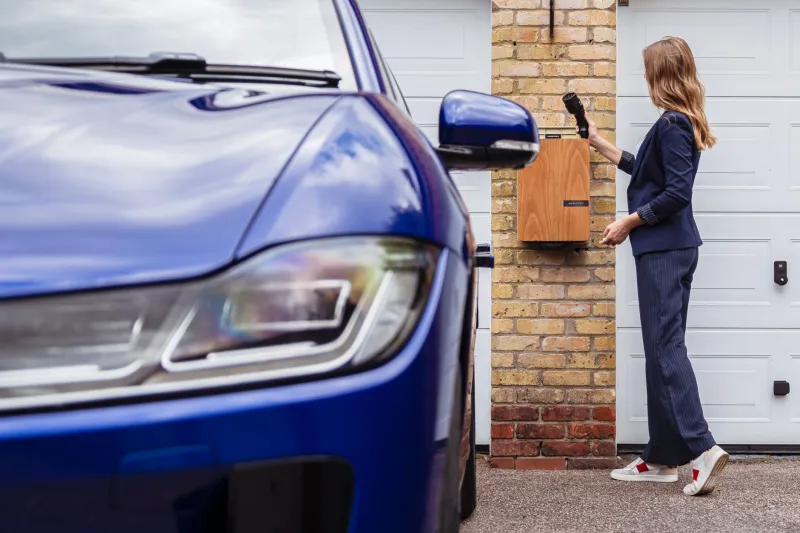
Slab Sense: Helping a Weathered Garage Floor Carry Your Electric Car

Photo: Ross4587, CC BY-SA 3.0, via Wikimedia Commons
The quiet load under the tyres
An electric car doesn’t feel especially heavy when you’re reversing it into a garage at walking pace. But the numbers tell a different story. Batteries add bulk, and a typical family EV can tip the scales at two tonnes or more. That weight doesn’t vanish because the car is only moving a few metres. It lands on four small contact patches, day after day, often in the same spot.
Many older UK garages were never designed with that in mind. A 1960s or 1970s concrete slab may have been poured for a much lighter car, or simply for storage. It might have been laid over a thin hardcore base, with expansion joints that have since taken in damp. None of that means your garage is about to collapse. It does mean the floor deserves a closer look before you treat it as a permanent EV parking bay.
The aim here isn’t to turn your garage into an engineering workshop. It’s to understand what you’ve got underfoot and make small, sensible changes that help an older floor age more gracefully.
Start with a proper look, not a quick sweep
Clear the garage as far as you reasonably can. Move the bike, the paint tins and the bag of compost you’ve been meaning to deal with. Sweep the floor, then look at it in good light. A torch held low and angled across the surface is surprisingly effective at revealing dips, humps and hairline cracks that disappear under normal overhead lighting.
Work around the room and note what you see. Fine spider cracks in the surface are often cosmetic. Long cracks that run across the slab, especially if one side has dropped or lifted, are worth flagging. Check the expansion joints and the edges where the floor meets the walls. Crumbling corners, a soft or hollow sound when you tap with a screwdriver handle, or a joint that has opened into a wide gap all suggest the slab has had a hard life.
Also look for damp. Dark patches, white powdery deposits, bubbling floor paint or a musty smell point to moisture coming through the concrete. That matters because damp weakens coatings and can make a floor more vulnerable to frost damage in winter. If the garage sits below driveway level or has a history of water pooling at the door, say so when you assess the floor.
You don’t need to diagnose the slab yourself. If you see significant cracking, movement, a clearly uneven surface or a floor that sounds hollow over a large area, get a structural engineer or a reputable local builder to look at it. A garage floor assessment is usually straightforward, and it’s cheaper than discovering a problem after the car has been parked on it for three years.
What the warning signs are actually telling you
Not every mark is a crisis. Surface crazing, where the concrete looks like a dried riverbed, is common in older slabs and often harmless. Scuffed paint is cosmetic. A few small chips near the door are normal wear.
The things to take seriously are changes in level, movement and moisture. A crack that has widened since you last looked is more concerning than one that has stayed the same for a decade. A slab that rocks slightly underfoot, or a joint with a visible step, suggests the base beneath it may not be supporting it evenly. Ponding after rain, or a damp patch that never dries, is a sign that water is getting in and staying there.
It’s also worth thinking about how the car sits. If your EV has wide, low-profile tyres, the load is concentrated into relatively small areas. Run-flats or heavy-duty tyres can make that feel more pronounced. You may not see the effect immediately, but repeated parking in the same place can gradually polish the surface, open existing cracks or distress a weak patch of concrete.
Spread the load without rebuilding the floor
For most home garages, the practical answer is load-spreading rather than structural work. Interlocking rubber or PVC garage mats are the simplest option. Look for thick, ribbed or coin-pattern mats designed for vehicle parking, not thin foam mats sold for gyms. A good mat spreads the tyre load over a wider area and gives you a sacrificial layer that’s easier to replace than a slab.
Garage floor tiles can work well too, especially if you want a tidy, sweepable surface. The key is the base. Tiles laid over a crumbling, uneven floor will simply copy the problems underneath. Fix the surface first, or choose a mat that can cope with minor irregularities.
Wheel cradles or parking mats with raised edges can help keep the car in a consistent position, but don’t expect them to solve a structural issue. They’re useful for habits and alignment, not for holding a failing slab together. If you use a cradle, check that it doesn’t create a trip hazard or interfere with charging cable routing.
For a really tired but basically sound floor, a moisture-tolerant epoxy coating can tidy things up and make spills easier to clean. Avoid ordinary floor paint over damp concrete; it will blister and peel. The surface needs to be dry, clean and properly primed. If there’s any doubt about moisture, use a breathable coating or leave the floor bare and rely on mats. Never coat over cracks as a way of hiding them. Fill them properly first, or leave them visible so you can monitor them.
Parking habits that are kinder to concrete
Small changes add up. Try to park in the same place each time, but not always with the same wheel sitting on the same weak patch. If your garage is wide enough, a slight shift left or right spreads wear. Come to a gentle stop rather than rolling in and braking hard at the last moment. Hot tyres on a cold, damp floor aren’t ideal, so let the car cool for a few minutes after a long run before parking if you can.
Keep the garage ventilated. A dry floor is a stronger floor. Clear the vents, avoid stacking cardboard against the walls and don’t let water from a wet roof or a leaking gutter run under the door. If you charge at home, keep the cable off the floor where possible and check that any floor-mounted equipment isn’t sitting on a damp patch.
Finally, look again each year. A quick spring and autumn inspection takes ten minutes and tells you whether a hairline crack is stable or starting to open. Your EV is welcome in the garage. With a bit of slab sense, the floor can stay welcome too.