Wet Verge, Dark Night: Building an EV Roadside Kit That Earns Its Boot Space
EV boots are already doing a lot. Between the charging cables, the type 2 lead you keep meaning to coil properly and the underfloor battery eating into the spare wheel well, there isn't much room left for a plastic crate of optimism. Add the weight penalty — every 50kg costs you a sliver of range — and the case for ruthless editing becomes obvious.
So this isn't a list of everything you could carry. It's the list of things that earn their place, judged against one scenario: it's 5pm in November, it's raining sideways, and you're on a narrow A-road verge with no streetlight for half a mile.
First, admit what the car already does for you
Modern EVs are packed with kit that makes half the traditional boot list redundant. Tyre pressure monitoring tells you about a slow puncture before it becomes a drama. The SOS button calls for help even when your phone has one bar. Most cars ship with a sealant and compressor kit instead of a spare. Many have automatic lights, keyless entry and a connected app that'll flash the indicators and honk the horn when you're wandering a retail park.
Check what came with your car before you buy anything. Duplicating a tyre inflator you already own is the most common way a boot kit becomes ballast.
The core six
12V jump pack. This is the single most useful thing in the bag. The number one no-start on an EV isn't the traction battery — it's the little auxiliary battery that runs the computers, the locks and the contactors. When that goes flat, the big pack can't help you. Buy one with at least 1,000A peak, reverse-polarity protection and USB-C charging, then actually top it up every few months. Lithium packs hate cold, so in winter keep it in the cabin rather than the boot, and read your manual for the correct jump procedure — some cars want the terminals, some want a specific sequence.
Tyre inflator. Rechargeable, digital gauge, preset pressure. EVs are heavy and often run higher pressures than drivers expect, and a slow puncture on a cold night is a miserable place to discover you left the compressor in the garage. A tubeless plug kit is worth adding only if you're genuinely confident using it — and it won't help with sidewall damage.
Head torch. Not a phone torch. A proper 300+ lumen head torch with a red mode, so you can hold a wheel brace and a torch at the same time. Add a small handheld as backup.
Hi-vis. Two vests, and store them in the cabin, not the boot. If the boot is loaded or you're standing behind the car, the last thing you want is to be rummaging in the dark for the thing that makes you visible.
Gloves. Nitrile for fluids, plus a pair of grippy work gloves for wrestling a wet cable or changing a wheel. Cold, wet hands lose grip fast.
Warning triangle and a rechargeable beacon. A triangle isn't a legal requirement in the UK the way it is in France, but on an unlit A-road it's money well spent. Do not use one on a motorway hard shoulder — get yourself and your passengers behind the barrier and call for help.
The charging corner
If your car didn't come with a Type 2 cable, buy one; plenty of 2026 models don't include it and you'll want it at public AC posts. A granny lead only earns its place if you genuinely use one. Beyond that: a couple of RFID cards or a note of your charging accounts, a small cable lock, and a dry bag so a wet lead doesn't soak everything else.
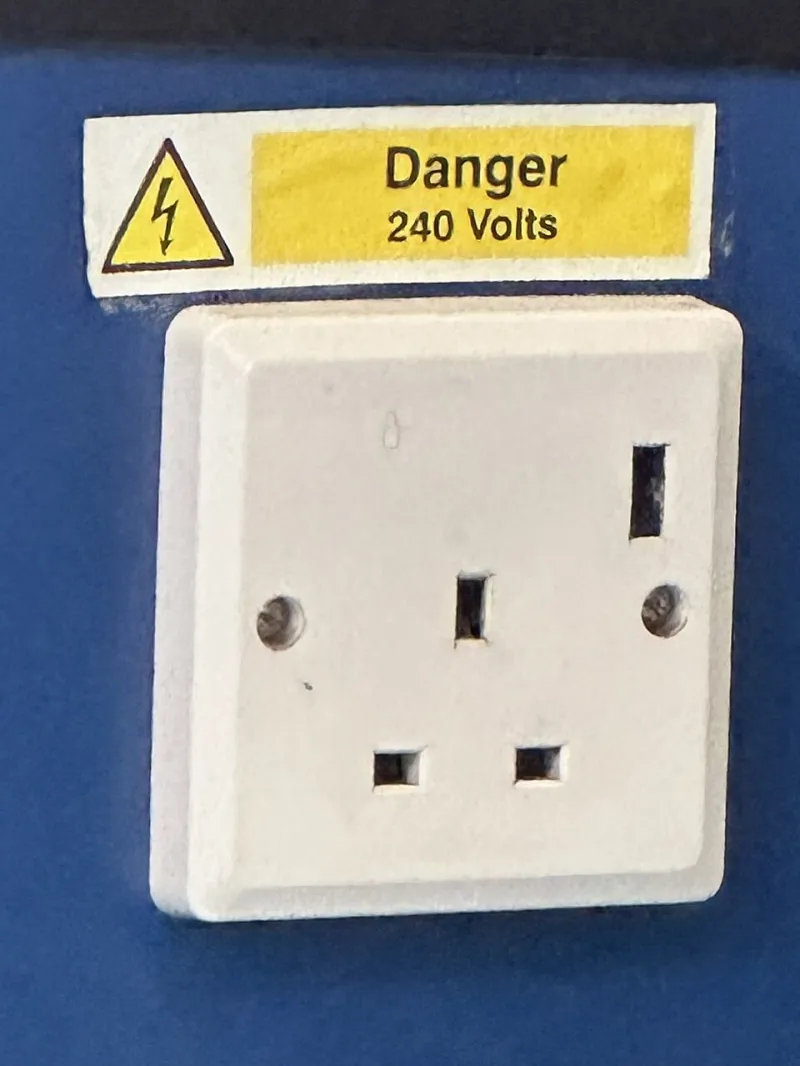
One thing to leave behind: the 20-metre domestic extension lead kept 'just in case'. Extension leads and EV charging are a poor combination, and a roadside bodge is how driveways and tempers catch fire.
Wet-weather extras worth the space
A packable waterproof jacket, a foil blanket, two spare pairs of socks, a microfibre cloth, de-icer and a scraper, a bottle of washer fluid, and a couple of bin bags. That last one sounds daft until you're kneeling on wet tarmac or covering a seat soaked by a leaking sunroof.
Power and paperwork
A USB-C cable and a 10,000mAh power bank cost almost nothing in space. So does a laminated card with your breakdown provider's number on it — because signal on a rural verge is a lottery, and your phone may be the thing that's dead.
Storage that doesn't rattle
A flat canvas tool bag or a shallow two-drawer box strapped to a lashing point keeps everything quiet and findable. Aim for under 10kg total. If you can't lift it out one-handed, it's too heavy and you'll stop maintaining it.
The dead weight to ditch
- A full socket set. You're not doing a suspension rebuild on the hard shoulder.
- A trolley jack. Heavy, useless on soft ground, and dangerous at the roadside.
- A tow rope. Most EVs want a flatbed, and towing with driven wheels on the ground can do real damage.
- A spare fuel can. Obviously.
- The giant first aid kit. A small, in-date one is better than a bulky one you never open.
- Camping gear that migrated in after one summer trip and never left.
The quarterly ten-minute check
Once every three months: charge the jump pack, test the torch, run the inflator for thirty seconds, check the sealant expiry date, swap the water bottle, replace used gloves and confirm the hi-vis is still in the cabin. That routine is what separates a kit that works from a bag of expired hope.
Budget around £120–£180 for the whole lot if you're starting from nothing, and considerably less if you already own a decent torch. Buy once, keep it charged, and you'll barely notice it's there — which is exactly the point.