Winter-Proofing the EV Garage: Nine Upgrades Worth Sorting Before the Cold Bites
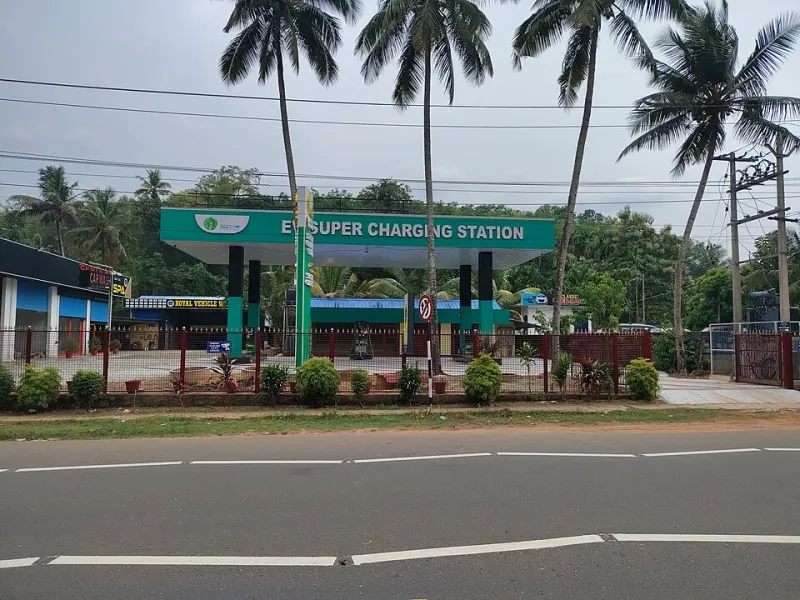
Photo: Manukrishnan80, CC BY-SA 4.0, via Wikimedia Commons
Winter in the UK doesn't arrive politely. It turns up as a 6am drizzle at three degrees, a windscreen you can't see out of, and a charging cable that's gone stiff as a broom handle. If your EV lives outside — or in a garage that's really just a shed with a door on it — a handful of modest upgrades now will save you a genuinely miserable December morning later. None of the nine below are glamorous. All of them are the sort of thing you're glad you sorted when it's dark at half four and you're due somewhere forty miles away.
1. Get the cable off the floor
This is the single cheapest win on the list. A cable coiled on a damp concrete floor sits in standing water, collects grit, and becomes a trip hazard every time you reverse in with your hands full. A wall-mounted holster or hook lifts the plug end clear and lets the cable hang in a loose loop rather than a tight coil — which matters in freezing weather, because tightly coiled cable stiffens and the conductors inside don't enjoy being bent at sharp angles at minus two.
If the run crosses a walkway, a rubber cable ramp or a covered channel is worth the twenty quid. Cold rubber cracks; proper ramps don't. And while you're at it: never run an extension lead out to the car. It's not rated for continuous load and it's how garages end up smelling of hot plastic.
2. A dehumidifier beats a fan heater every time
British garages are essentially humidity chambers with a roof. That damp doesn't just make the place feel grim — it condenses on cold metal, corrodes charger terminals and hand tools, and quietly soaks into seat foam and carpet if the car sits for days. A small desiccant or compressor dehumidifier with a continuous drain and a timer will pull litres out of the air for pennies a day, and it does more for your car's interior than any heater will.
Pair it with a cheap hygrometer so you can actually see whether it's working. If you'd rather not run one, a couple of reusable silica boxes near the charge point and under the seats are better than nothing.
3. Sort the 12V battery before it strands you
Every winter, a chunk of 'my EV won't start' callouts are nothing to do with the traction battery. Cold weather knocks the capacity out of a tired 12V auxiliary battery, and that's the thing that wakes up the computers, closes the contactors and lets you drive. A smart battery maintainer left connected once a fortnight through the cold months is cheap insurance, and a plug-in voltage monitor tells you whether the battery is on its way out before it decides for you.
If the car is doing short, heater-heavy trips all winter, this is the single most useful gadget in the garage.
4. Make preconditioning a habit, not an afterthought
Warming the cabin and conditioning the pack while the car is still plugged in means the energy comes from the mains, not from the battery you're about to rely on. Set a departure time in the car or the charger app the night before and let it defrost itself. Ten minutes of scheduled preconditioning does more for range and visibility than any amount of scraping.
Worth checking your charger supports scheduled charging properly — some cheaper units are clumsy about it, and a smart charge point will happily shift the load into your off-peak window at the same time.
5. Heat the person, not the whole garage
Nobody sensible tries to turn a single-skin garage into a living room. What you actually want is a frost protection heater on a thermostat, set to around 5°C, plus a local heat source over the bench — a small infrared panel or a 500W tubular heater is plenty. That keeps the worst of the condensation off and makes spannering tolerable.
Avoid paraffin or LPG heaters in a sealed garage. Carbon monoxide in a space you also charge a car in is a genuinely bad idea, and the moisture they produce makes damp worse, not better.
6. Build a dark-morning kit that lives in the boot
You want this assembled in November, not improvised at the roadside in January. A decent headtorch, hi-vis vest, insulated gloves, a foil blanket, a tyre inflator that runs off the car's 12V socket, a lithium jump pack, screen wash concentrate, a warning triangle and a bag of grit or salt. Add a spare Type 2 cable if you own one, plus a lock for it.
The point isn't drama — it's the ten-minute jobs that otherwise become forty-minute jobs in the rain on an unlit verge.
7. Deal with salt before it deals with your car
Gritters don't care about your paintwork. A quick rinse of the arches and sills once a week through the worst of it does more than a spring polish, and rubber winter mats stop salty slush migrating into the carpet. Keep the charge port flap and surround clean and dry — salty gloves and a damp connector are how you get corroded pins and an intermittent charge fault that's a nightmare to trace.
A soft brush and a microfibre in the garage, used routinely, is the whole solution.
8. Light the place up properly
It's dark by four for months. A motion-sensor LED batten above the charging bay costs very little to run and means you're not juggling a phone torch while trying to seat a connector. Add a rechargeable work light on a magnetic base for anything more involved. Good light is the difference between a job done and a job done twice.
9. Store the cable kindly
Hang it loose, keep the plug end sheltered, and check the sheath for cracks before the really cold weather sets in. If your charge point is untethered, a weatherproof holster and a spare cable bag keep the thing out of the wet when you're not using it. Cables are tough, but they're not indestructible, and a replacement isn't cheap.
The short version
Most of this is a weekend's work and a few hundred pounds spread out. Prioritise the cable management, the 12V maintainer and the dehumidifier — those three solve the majority of winter EV misery. Everything else is polish on top. Do it now, while the weather is merely unpleasant rather than actively hostile.